
Significance
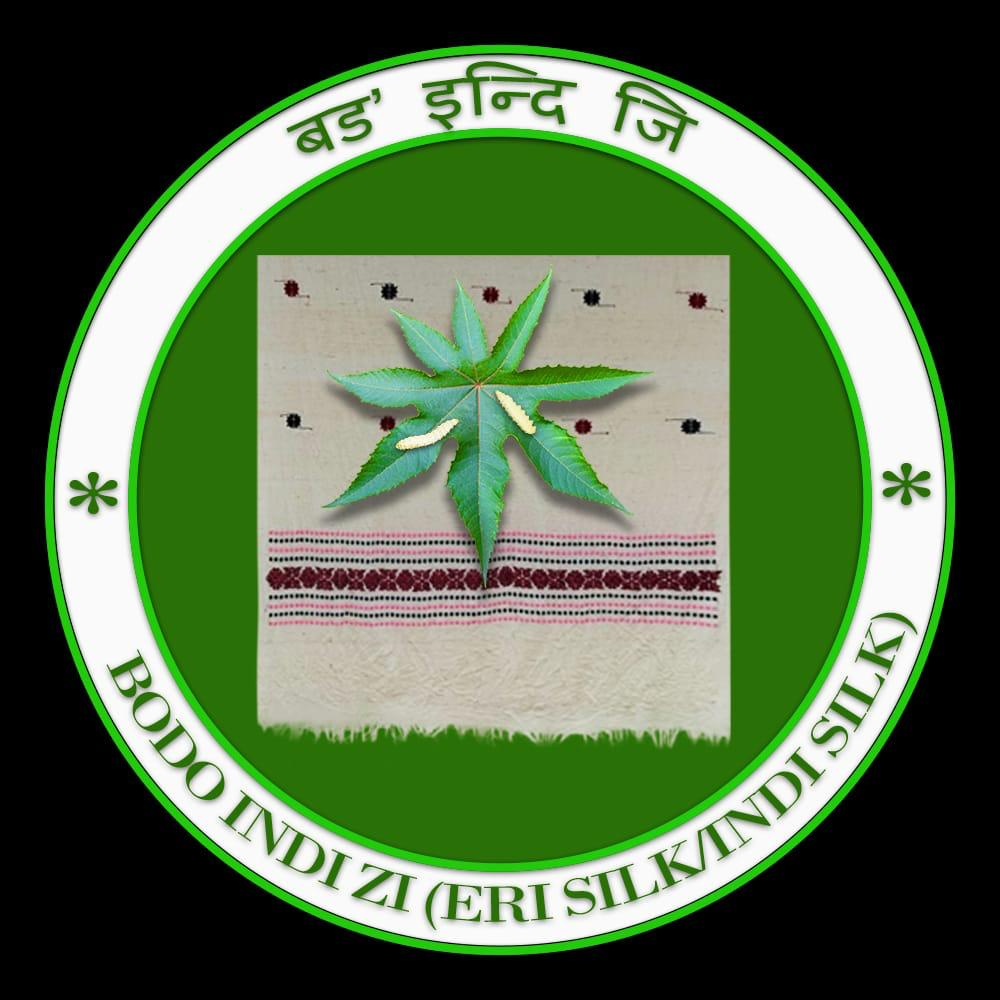
Bodo Eri Silk, locally called Indi Zi, is an “Ahimsa” or peace silk produced without killing the silkworm. The Bodos are considered among the first to introduce sericulture and silk rearing in India, and Eri is regarded as the very legacy of the community.
History & Cultural Context
Eri Silk is derived from the Assamese word “era” meaning castor, as the silkworm feeds on castor plants. Soft, warm and traditionally used for shawls and quilts, it occupies a unique place in the socio-economic life of the Bodo people — it is said that just as a mother is inseparable from her infant, so are the Bodos inseparable from their silks. 1st May is celebrated to honour Eri farmers and weavers.
Process & Techniques
Method of production: (1) Farming of Eri silkworms on castor and cassava leaves (~45 days); (2) Extraction — after the moth naturally leaves the open-ended cocoon, the raw filament is boiled and dried in Tharai leaves for 4–7 days; (3) Spinning through Danga Natha, Swrkhi, Thaokhri, Jothor and Grill machines to obtain fine thread; (4) Weaving on the wooden loom; (5) Dyeing with natural dyes.
Traditional Knowledge
Eri is the only silk bearing a red cocoon, found in the Kokrajhar and Chirang districts of Bodoland. It is hypoallergenic and thermo-regulating, extremely durable (said to last up to three generations) and has antimicrobial properties, fitting circular-economy principles. Weaving tools are hand-made from local bamboo, wood and cane.
GI Registration Details
GI Number
GI 606
Application No.
606
Class
Class 23 & 24
Filing Date
29 August 2022
Registration Date
March 2024
Registered Applicant
Association of Bodo Traditional Weavers
Facilitated By
Bodo Culture and Heritage Preservation Board (BCHPB)
Geographic Origin
Bodoland Territorial Region (BTR), Assam
Verification Status: VERIFIED
The Trust does not own these GI registrations. GI applicant/registered proprietor information is displayed as documented.