
Significance
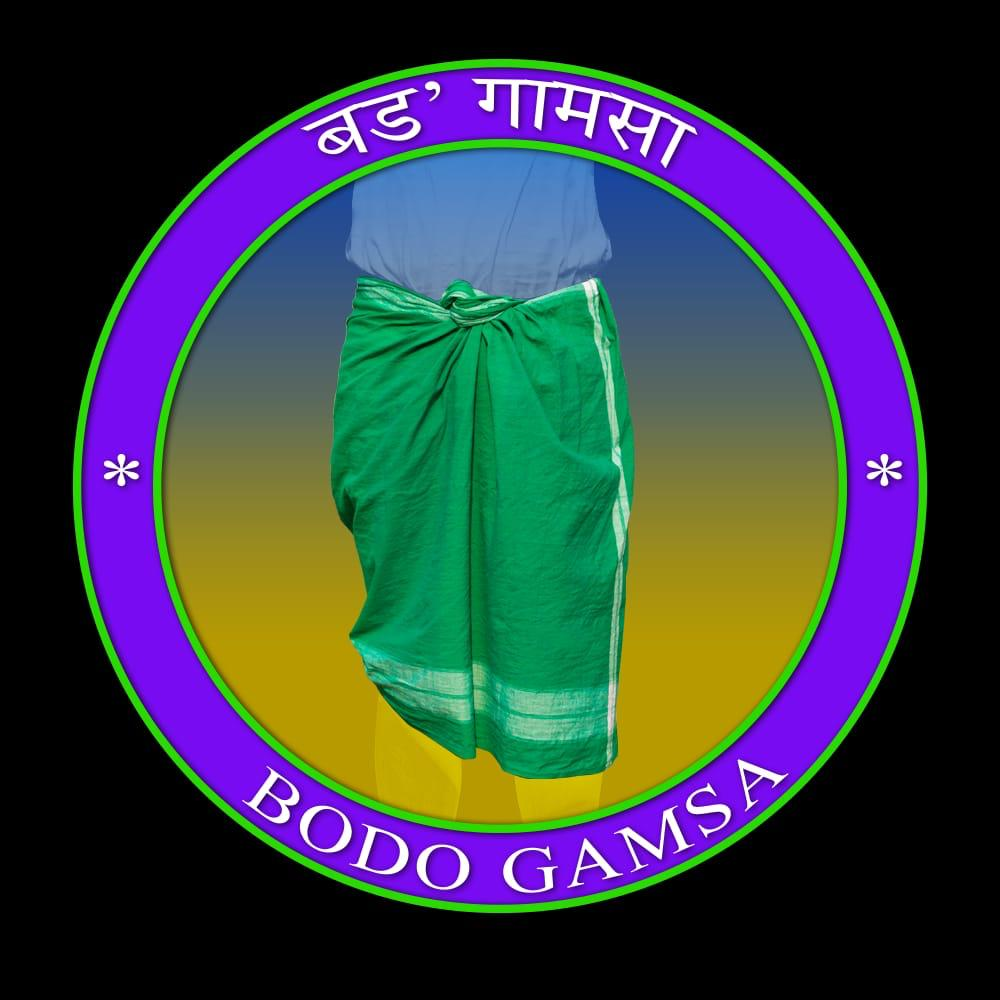
Gamsa is the main traditional dress of Bodo men — a cloth (1.5–2 m long) worn wrapped around the hips, falling to the knee. Green Gamsa with a white border is worn as wedding attire and is compulsory while worshipping the deity.
History & Cultural Context
Gamsa is worn in the Bagurumba dance and as everyday household attire. During Bwisagu — the main Bodo festival heralding the New Year — Gamsas are exchanged between family members as a mark of mutual respect and forgiveness on the first day of the year. In weddings Bodo men wear green or yellow Gamsa, while a plain Gamsa is used at home.
Process & Techniques
Method of production: Ginning (cotton seeds dried and cleaned with a wooden device locally called “Neotha hwnai”); Sizing (boiled with raw rice in an earthen pot); Spinning (sun-dried, rotated into fine thread, passed through the Grill machine); Winding; Beaming (warp transferred to weaver’s beam); and Weaving.
Traditional Knowledge
The Marhwrnai process adds strength to the thread, making Gamsa extremely durable and comfortable — lasting at least 2–3 years with regular use. Green with a white border is the culturally significant colour, reserved for worship and weddings.
GI Registration Details
GI Number
GI 608
Application No.
608
Class
Class 24
Filing Date
29 August 2022
Registration Date
March 2024
Registered Applicant
Association of Bodo Traditional Weavers
Facilitated By
Bodo Culture and Heritage Preservation Board (BCHPB)
Geographic Origin
Bodoland Territorial Region (BTR), Assam
Verification Status: VERIFIED
The Trust does not own these GI registrations. GI applicant/registered proprietor information is displayed as documented.