
Significance
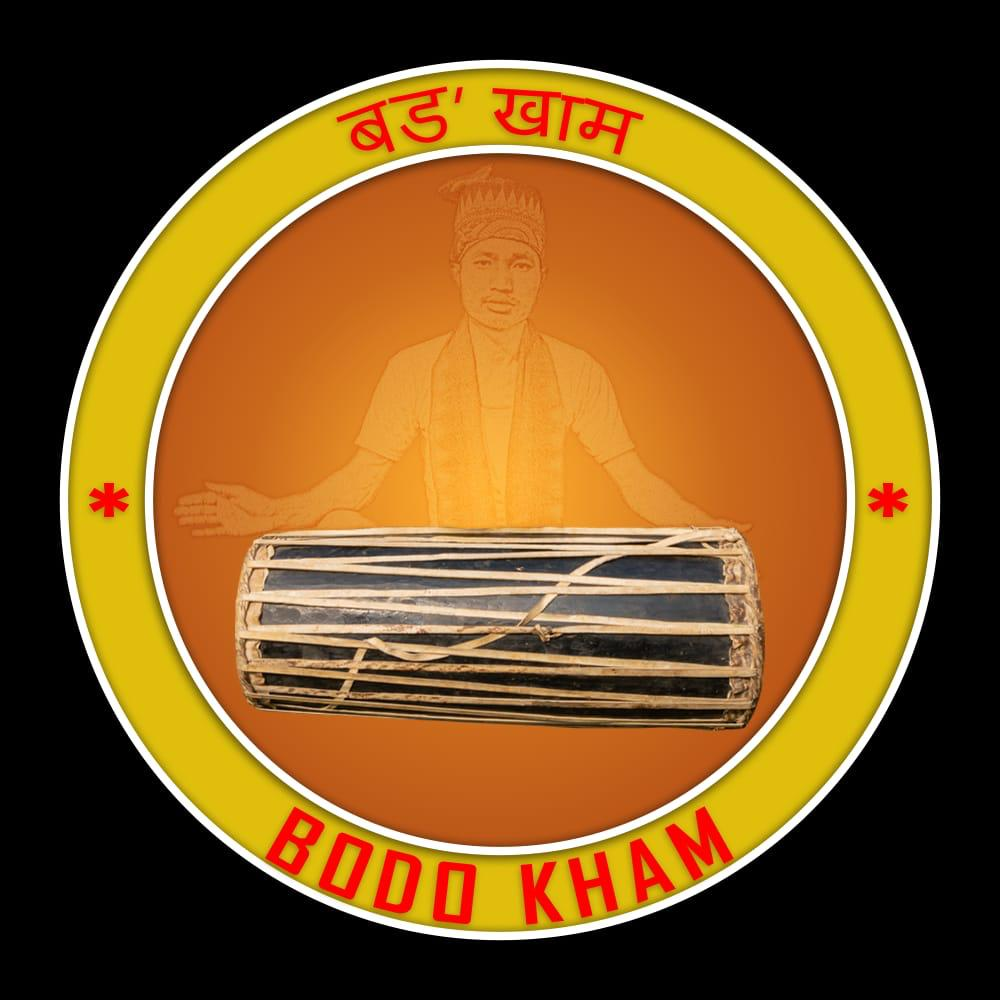
Kham, also known as Madal, is the most important Bodo percussion instrument — a large double-headed drum, small on one side and larger on the other, played with both hands and slung from the neck or hip with a jute band. No Bodo celebration is complete without it.
History & Cultural Context
The Kham is played on occasions such as Bwisagu, Domashi, Kherai puja and Garja puja. According to Bodo mythology its sound is so loud that it can be heard in heaven by the God. It has tremendous importance in Bodo culture and is believed to bring energy and positivity to the people.
Process & Techniques
The Kham is hand-made by a skilled expert: the tree trunk is hollowed, a unique clay paste is applied to the sides, and the two ends of the wooden frame are covered with leather. It takes seven to fifteen days to complete one Kham, which then lasts around 30–40 years.
Traditional Knowledge
The instrument’s parts have Bodo names — Kham khi, horgra dirung, jinjri/khudi, khwma, dongphang and dowan/mucha bigur. It is roughly 3½–34 inches in circumference and made only by artisans with inherited expertise. (Source referenced in the booklet: “Bodo Dances” by Dr. Liladhar Brahma.)
GI Registration Details
GI Number
GI 612
Application No.
612
Class
Class 15
Filing Date
29 August 2022
Registration Date
March 2024
Registered Applicant
Bodo Musical Artisan's Association
Facilitated By
Bodo Culture and Heritage Preservation Board (BCHPB)
Geographic Origin
Bodoland Territorial Region (BTR), Assam
Verification Status: VERIFIED
The Trust does not own these GI registrations. GI applicant/registered proprietor information is displayed as documented.