
Significance
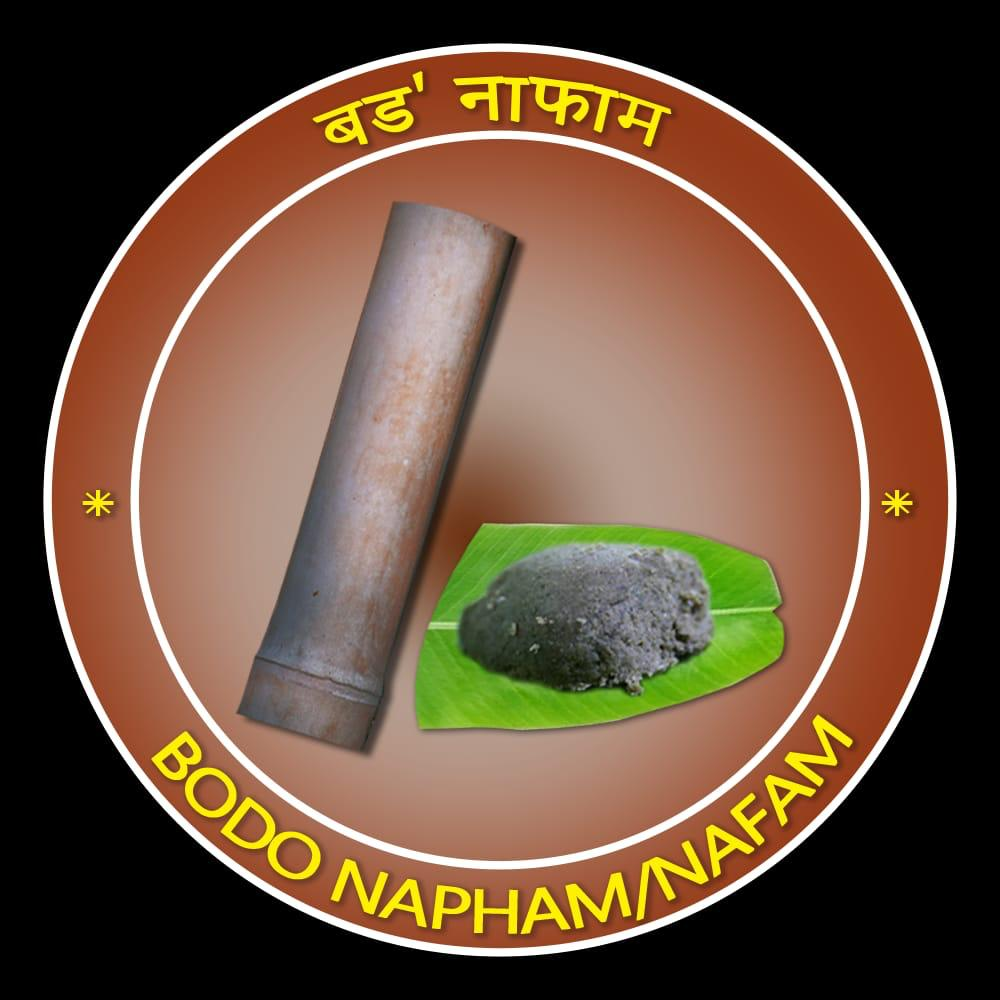
Napham is a unique fermented fish preparation of Bodoland — one of the most important and favourite fermented fish cuisines of the Bodo people, consumed as a condiment or gravy with rice. It is a rich source of minerals and essential amino acids (about 32% essential amino acids).
History & Cultural Context
Owing to high rainfall and seasonal non-availability of fish in the North-East, the Bodo community developed fermentation to preserve fish for long periods — for consumption during floods, heavy rainfall and food scarcity. Napham is eaten as a chutney or used as an additive in curries, and can be stored for 2–3 years.
Process & Techniques
The pounded dried fish, with additives such as Colocasia, is packed into a hollow bamboo stem open on one side. The opening is sealed with banana leaves and mud paste to create anaerobic conditions and left to ferment for 2–3 months.
Traditional Knowledge
The use of the local alkali Khardwi as an alternative to salt makes fermentation faster; the whole process adds flavour, nutrition and the characteristic umami taste. Napham is consumed as a condiment with Colocasia stems or Hibiscus sabdariffa leaves, curry and soup.
GI Registration Details
GI Number
GI 645
Application No.
645
Class
Class 29
Filing Date
29 August 2022
Registration Date
October 2024
Registered Applicant
Association of Traditional Food Products
Facilitated By
Bodo Culture and Heritage Preservation Board (BCHPB)
Geographic Origin
Bodoland Territorial Region (BTR), Assam
Verification Status: VERIFIED
The Trust does not own these GI registrations. GI applicant/registered proprietor information is displayed as documented.