
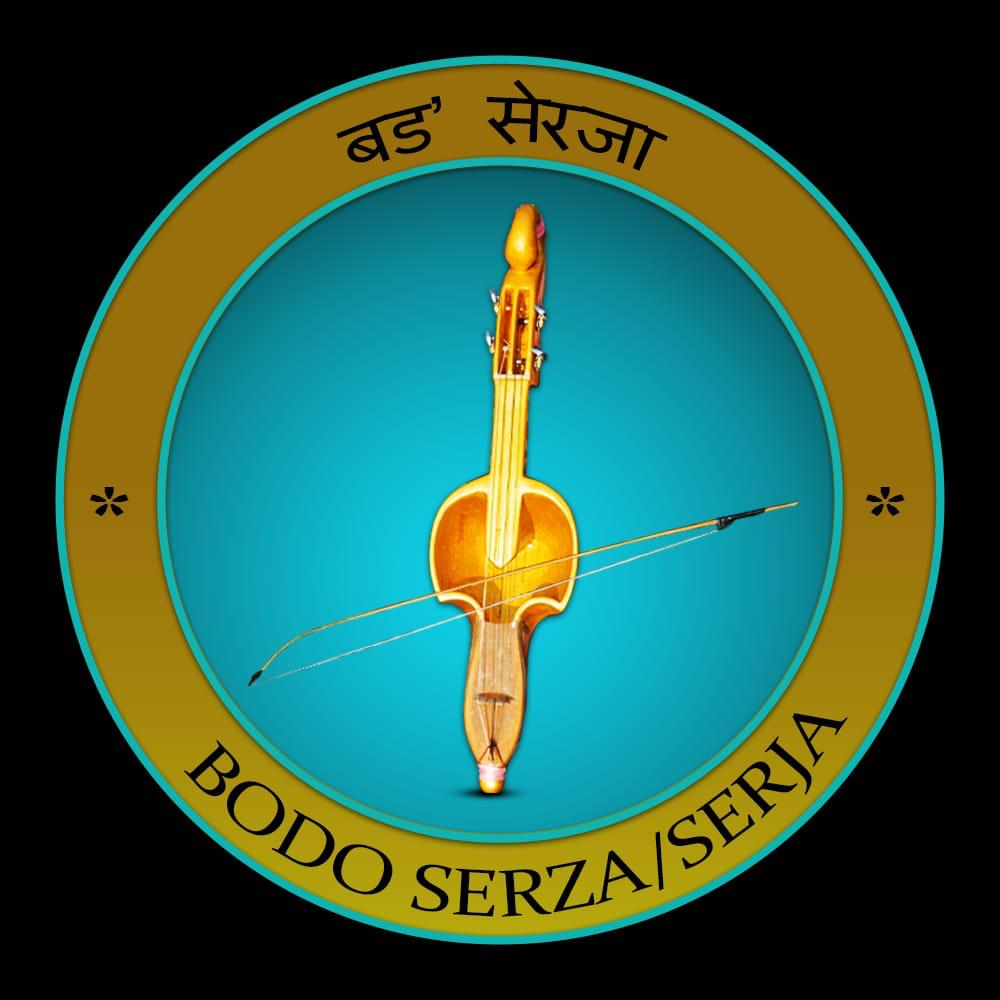
Significance
Serja is a traditional bowed stringed instrument of the violin family with four strings, producing intense, melodious music. It holds great ceremonial significance in marriage ceremonies and the Bwisagu and Domashi festivals of Bodoland.
History & Cultural Context
The Serja is often accompanied by instruments such as Jotha, Jabsri and Sifung during festivals and marriages. Its parts are named after human body parts — the crown of the curved part is the “head” and the tuning screws are the “ears” — showcasing the deep connection between the instrument, its music and the Bodo people. Storytelling is often accompanied by the Serja.
Process & Techniques
Crafting a Serja typically takes around 3–7 days per instrument and, once made, it can last around 50 years. It is played with a technique opposite to that of the modern violin — the apex facing upward and the bottom pointing downward during performance.
Traditional Knowledge
The many parts of the Serja carry Bodo names for human anatomy — Thikhni (crown), Khuga (mouth), Khoro (head), Gwdwna (neck), Bikha (heart), Janjai (waist), Aheb (ribs) and more — reflecting a deep cultural connection. Expertise in crafting the Serja has been developed by Bodo artisans over generations. (Source referenced: “Bodo Dances” by Dr. Liladhar Brahma.)
GI Registration Details
GI Number
GI 613
Application No.
613
Class
Class 15
Filing Date
29 August 2022
Registration Date
March 2024
Registered Applicant
Bodo Musical Artisan's Association
Facilitated By
Bodo Culture and Heritage Preservation Board (BCHPB)
Geographic Origin
Bodoland Territorial Region (BTR), Assam
Verification Status: VERIFIED
The Trust does not own these GI registrations. GI applicant/registered proprietor information is displayed as documented.